Showing posts with label Service Communications. Show all posts
Showing posts with label Service Communications. Show all posts
Wednesday, 27 May 2015
RATIONALE
We considered Te Papa as a client and Frankie as our millennial user to create our own brief. From this we researched Te Papa’s aspirations to be representative of the Nation. We found that most millennials believed Te Papa to be tourist focused and generically New Zealand, whereas they would prefer to associate themselves with a local more relatable entity. By understanding our user and where she associates herself with we discovered what those places offer that Te Papa doesn’t. We responded to these findings by creating a space within Te Papa where users can feel connected to the community through video narratives.

Opportunities/On Reflection
Museums act as a space to store and look after treasures. But what makes those objects ‘treasures’ are the narratives and context behind them. Our idea is to think of the people as the objects and their stories as the treasures. Our idea would allow Te papa to collate a collection of people’s memories to create a national identity through people rather than objects. Documenting the changing face of New Zealand.
Te Papa is interested in collecting contemporary. Our idea can respond to this by changing the topics and prompt questions to reflect current issues.
Our idea can easily be implemented in other museums around the country.
Te Papa could collaborate with these museums and create the same community video spaces within them. The data(video)base would then become a documentation of people’s stories throughout NZ. You would also be able to access the stories from other cities through the timeline to “get to know your nation”. A touring video booth to would be implemented to access people from rural communities. This would help create a sense of nationhood, being part of NZ, while still appealing to Frankie’s sense of engaging with the local community.
5 years in the future the videos could be associated with each person by scanning their fingerprint, this would mean that they can easily bring up their past videos on the interactive timeline by just touching the screen. This creates a time capsule where they can see how much they have changed and reflect.
Our idea would also appeal to our other user, the Six Pack; a millennial couch surfer who wants to engage with people and cultures within the city. They do not actively participate in ‘touristy’ things preferring to hang out with the locals. Our idea would appeal to this user as it acts as an authentic documentation of the people who live and breathe the city.


Saturday, 23 May 2015
Final prototype notes and feedback
I wrote notes analysing peoples thoughts as they went through our prototype, asking questions to learn more about what user needs. This gave us a better idea of 'putting ourselves in frankies shoes' to better understand the relity of the idea we were exploring. From this we gained constructive feedback and quotes from people that we could bring into our dossier.


Friday, 22 May 2015
Possible solutions for our big idea
Divergent convergent. This is my brainstorming for our big idea:
Referring back to user and her needs


Referring back to user and her needs


Wednesday, 20 May 2015


Saturday, 16 May 2015
Trying to come up with another big idea
Brainstorming an idea to bring our interactive street experiences.


We felt we have lost our user, and find our idea going no where. So decided to go back to the drawing board
Friday, 15 May 2015
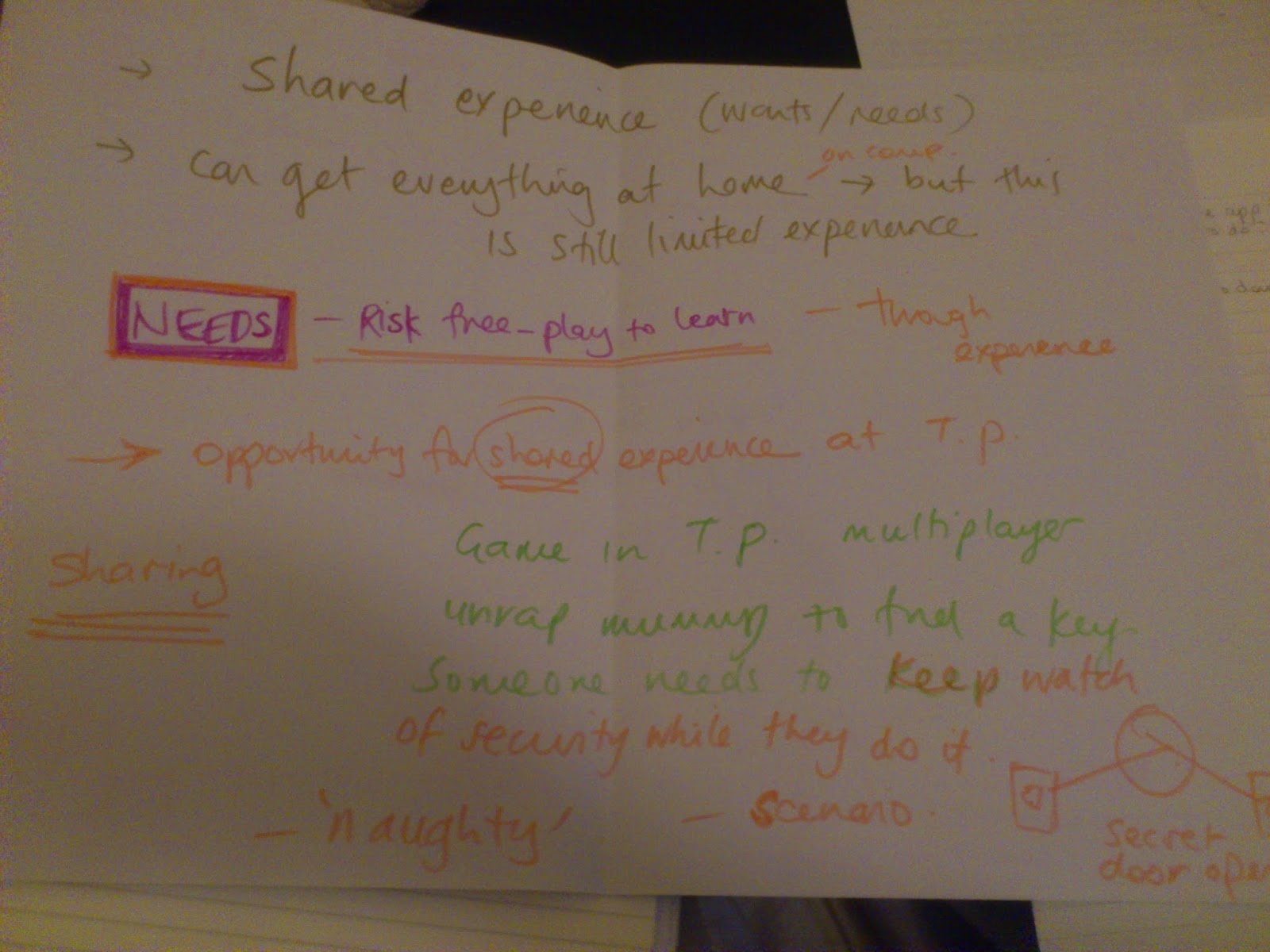
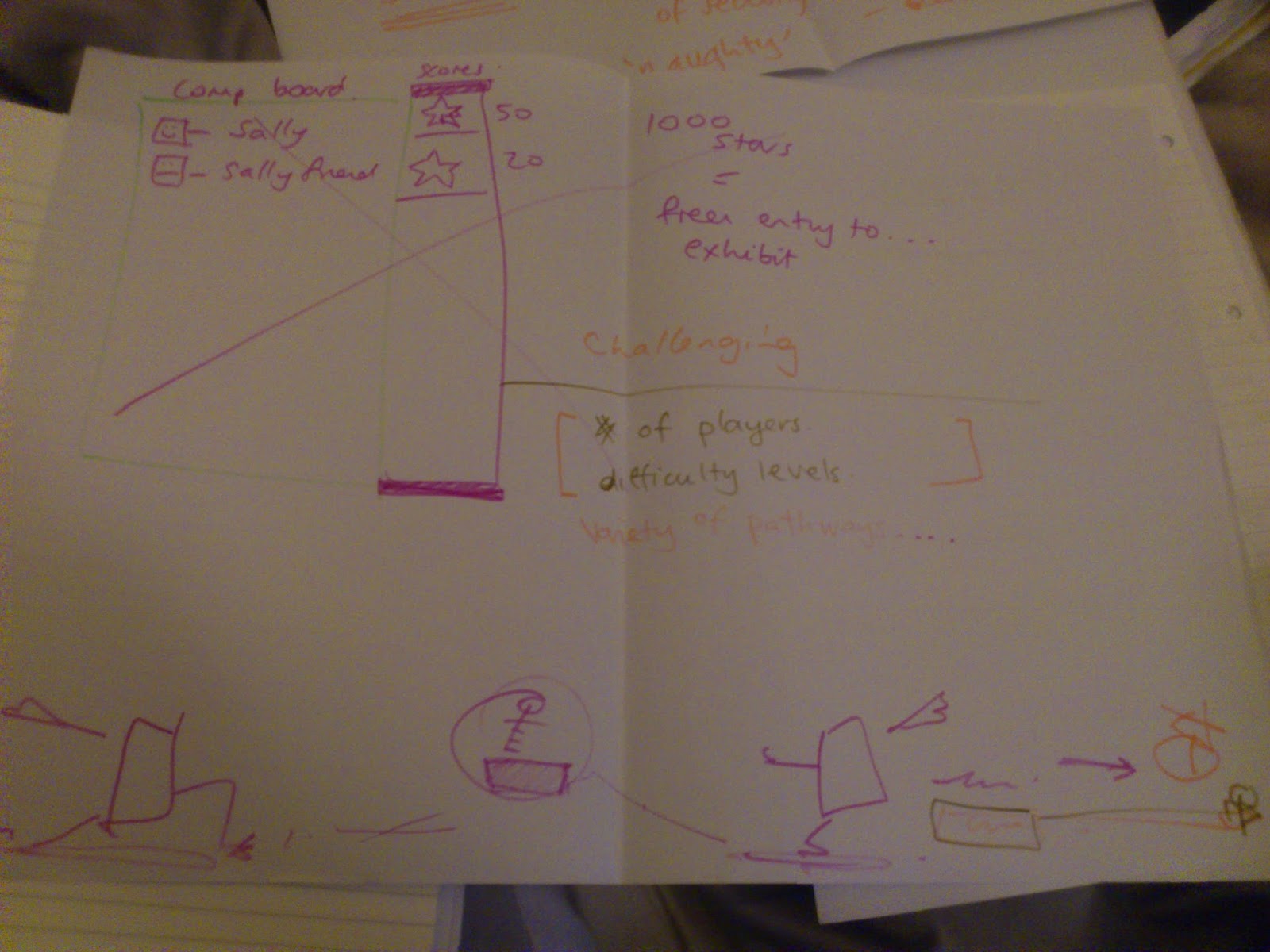
Game idea
One of the ideas that came up from user testing was to make it more like an interactive game, like a chose your own adventure.

 After fleshing out this idea a bit we decided it was not responding to our millenial or Te Papa.
Phone element addition to prototype


The idea behind this is that users will use their phones to download an app in order to interact with the walls in a more personal way. By letting the user use their own phone it will feel more natural and easy to understand.
The user would walk into the space and receive a push notification on their phone prompting them to download a small app on the free wifi in the space. The app will allow the user to flick through different objects that they can then place into the environment in the wall in order to interact with what is going on. The interaction also allows for the users to win prizes like free exhibition passes.
FEEDBACK:
The users felt confused; they weren't sure what the objects were for and what they could do with them. The confusion lead to them doing nothing instead.